

Personal fitness coaching is most effective when it is not based on guesswork. A strong coaching process begins with assessment, continues through regular feedback and improves through adaptation. These three elements help create training that is specific, safe and responsive to the client’s progress.
People searching for a personal gym trainer singapore often want more than workout supervision. They want a plan that helps them improve with clarity. Assessment, feedback and adaptation make that possible by ensuring the programme changes as the client changes.
Assessment reveals the starting point
Before progress can be planned, the trainer must understand the client’s starting point. This may include fitness history, goals, movement quality, injury concerns, strength level, stamina, mobility and lifestyle habits.
Assessment helps avoid generic programming. A client with limited shoulder mobility should not follow the same upper body plan as someone with strong movement control. A client with low stamina may need gradual cardio development before intense conditioning.
The assessment stage helps the trainer build a programme that fits the client rather than forcing the client into a standard routine.
Movement screening improves safety
Movement screening can reveal how the body performs basic patterns such as squatting, hinging, pushing, pulling and rotating. These patterns are used in both gym training and daily life.
If a trainer notices poor control, imbalance or restricted movement, they can modify exercises. This may involve changing range of motion, reducing load, adding mobility work or strengthening supporting muscles.
This approach improves safety because the programme starts where the client actually is. It does not assume readiness.
Feedback improves exercise quality
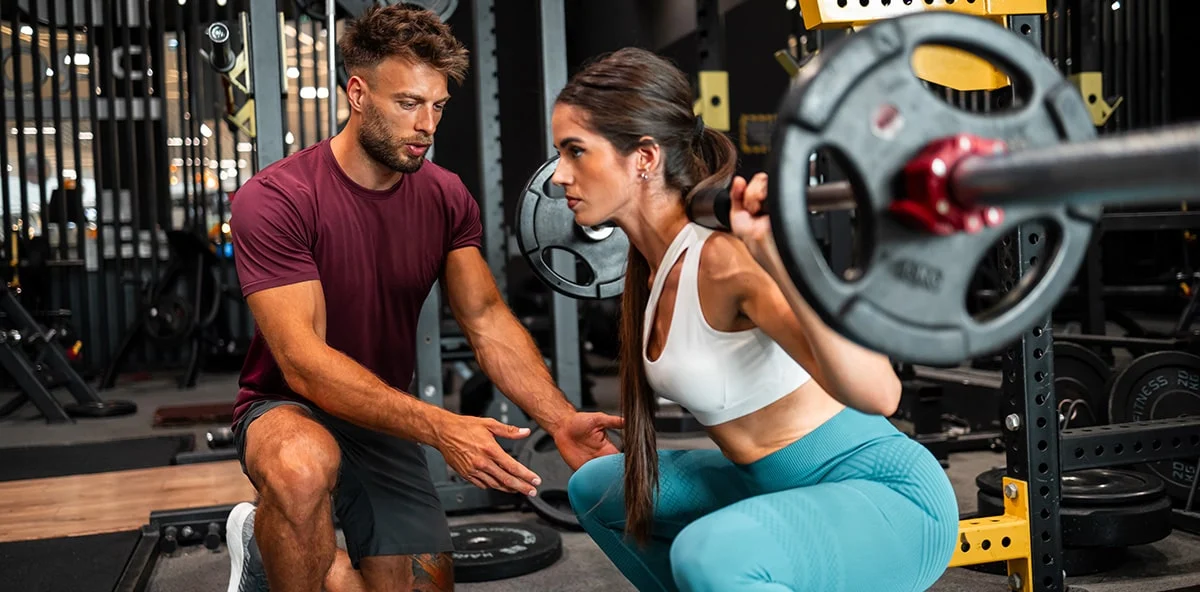
Feedback is one of the most valuable parts of personal coaching. During a workout, the trainer can observe technique and make corrections immediately. This helps clients avoid repeating mistakes.
Feedback may include cues about posture, breathing, tempo, grip, alignment or effort level. Sometimes a small cue can completely change how an exercise feels.
For example, adjusting foot position during a squat may improve stability. Changing shoulder position during a row may activate the back more effectively. Slowing down a movement may increase control.
Feedback also supports motivation
Feedback is not only correction. It also includes encouragement and progress recognition. Many clients do not notice their own improvements. A trainer can point out better form, increased strength, improved stamina or more consistent attendance.
This helps motivation because progress becomes visible. Clients are more likely to continue when they understand that their effort is working.
Positive feedback also builds confidence. It helps clients feel capable rather than judged.
Adaptation keeps the programme relevant
A fitness programme should not stay unchanged forever. As the client improves, the plan must evolve. Exercises may become more challenging, weights may increase, cardio may progress or new goals may be introduced.
Adaptation also matters when life changes. A client may face a busy work period, travel, poor sleep or stress. The trainer may need to adjust intensity or session structure.
This flexibility makes coaching more sustainable. The programme remains useful because it responds to reality.
Plateaus require intelligent adjustment
Plateaus are normal. They happen when the body adapts to the current training stress. Instead of simply pushing harder, a trainer can identify what needs to change.
The solution may involve changing training volume, exercise selection, tempo, rest periods, cardio structure or recovery habits. Sometimes the client does not need more intensity. They may need better sleep or improved nutrition.
Assessment and feedback help the trainer understand the reason behind the plateau.
The gym environment supports coaching decisions
A trainer needs appropriate tools to adapt sessions properly. Access to different machines, free weights, cables, cardio equipment and open training spaces makes coaching more flexible.
A facility such as True Fitness Singapore can support this process by offering a professional environment where different training needs can be addressed.
When the environment provides options, the trainer can make better modifications for each client.
Clients learn through the coaching process
Assessment, feedback and adaptation do not only help the trainer. They also help the client learn. Over time, clients understand their body better. They learn which movements need attention, how to recognise effort levels and how recovery affects performance.
This knowledge is valuable because it builds independence. A client who understands training principles is more likely to maintain fitness long term.
Personal coaching should educate, not only instruct.
FAQ
What happens during a fitness assessment if I am not very fit?
The assessment should meet you where you are. It may include basic movement checks, lifestyle questions and goal discussion. It is not meant to embarrass you. It helps the trainer build a safe plan.
My trainer keeps changing exercises. Does that mean the plan is not fixed?
Not necessarily. Good coaching adapts when needed. Some changes are made because you are improving, while others may be due to recovery, form or specific goals.
I do not always feel progress, but my trainer says I am improving. How can that be?
Progress can show up in better form, more control, improved stamina, less fatigue or increased consistency. Not all progress is immediately visible in body shape.
Should I give honest feedback if an exercise feels uncomfortable?
Yes. Your trainer needs accurate feedback to adjust the session. Discomfort, pain, fatigue and uncertainty should all be communicated clearly.
Conclusion
Assessment, feedback and adaptation are essential in personal fitness coaching. They help create a programme that is specific, safe and responsive to the client’s real progress.
For people in Singapore, this approach makes personal training more effective than generic workouts. It allows training to evolve with the body, lifestyle and goals of each client.